Dubai, United Arab Emirates, January 5, 2026:
As 2026 begins, the Middle East is entering a more demanding and mature phase of its development journey. After a decade defined by scale and ambition, the coming years will be shaped by precision, execution quality, and long-term value. Infrastructure and city-building projects are no longer judged by size or symbolism alone, but increasingly as integrated portfolios expected to deliver efficient mobility, higher productivity, urban resilience, and measurable carbon reduction. This shift is set to define the region’s infrastructure narrative in 2026.
From Scale to Performance: Redefining Infrastructure Value
This shift is clearly reflected in the operating models of leading delivery and advisory firms, which have already begun reshaping their strategies to align with the demands of this new phase. AECOM, for example, surpassed its 2026 financial targets two years ahead of schedule, reporting revenues of €2.164 billion in 2024, a 14% year-on-year increase, alongside a record order backlog of €4 billion.
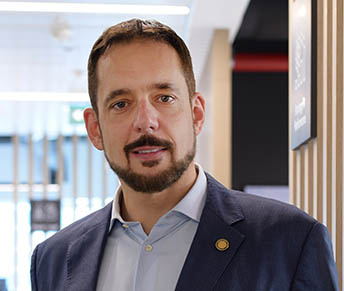
Federico Giustozzi, Chief Executive Officer for the Middle East and South Asia at AECOM, noted that “the true significance of these results lies not in the numbers alone, but in the tangible progress the Group is making in digital transformation and climate-aligned engineering. This reflects a broader regional and global shift away from volume-led expansion toward performance, sustainability, and long-term value delivered across the full life cycle of assets.
Strong Market Momentum Driven by Structural Commitments
Market fundamentals remain robust. Infrastructure construction in the Middle East is projected to grow from approximately USD 204 billion in 2025 to nearly USD 266.7 billion by 2030, representing a compound annual growth rate (CAGR) of 5.51%. This expansion is not simply cyclical; it reflects structural commitments to economic diversification, tourism, logistics, and advanced industry, as well as the strategic importance of reliable infrastructure in enhancing regional competitiveness.
Parallel momentum is evident in South Asia. The construction sector was valued at around USD 1.03 trillion in 2024 and is expected to grow at roughly 5.8% annually through 2028. India, in particular, stands out, with infrastructure investment estimated at USD 190.7 billion in 2025, projected to reach USD 280.6 billion by 2030, at a CAGR of nearly 8%. Collectively, these trajectories underscore a shared reality: infrastructure is no longer merely accommodating growth—it is actively reshaping economic models.
Three Pillars Defining the Next Phase
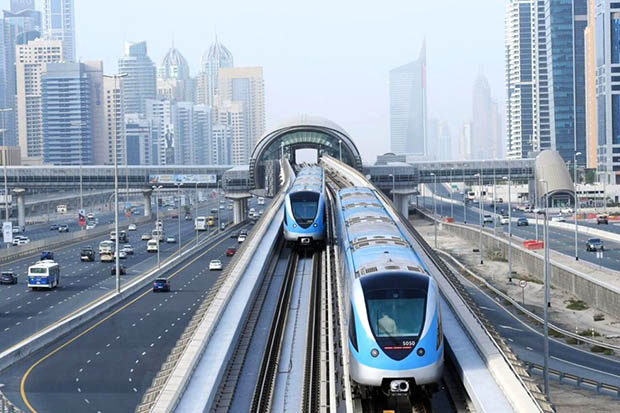
By 2026, three interlinked domains will define infrastructure-led growth across the Middle East: mobility networks, sustainable urban development, and transformation in energy and industry. These are no longer standalone sectors; their success increasingly depends on integration, resilience, and climate readiness.
Aviation deserves particular attention within the mobility ecosystem. Across the region, air transport is being treated as a fully integrated economic system linked to tourism, logistics, trade, and city competitiveness. Airport expansions across the Gulf, new hub strategies, and enhanced air cargo capabilities are increasingly aligned with multimodal transport networks, free zones, and visitor economy objectives. Looking ahead, emphasis will shift from new terminals alone to operational efficiency, passenger experience, digital airport management, reduced turnaround times, and lower ground-operation emissions.
From Construction to Activation: Performance in Practice
Examples of this performance-driven approach are already visible. AECOM supported the expansion of Terminals 1 and 2 at King Khalid International Airport through digital advisory and operational readiness services. The firm also played a central role in the Riyadh Metro, delivering design and construction for approximately 60% of the network, including award-winning stations such as Qasr Al Hokm. Meanwhile, the reactivation of the King Abdullah Financial District (KAFD) monorail illustrates a growing emphasis on optimizing and activating existing mobility assets rather than simply building new ones.
Saudi Arabia: Growth Engine and Priority Reset
Saudi Arabia remains the region’s primary growth engine. The Kingdom’s construction market is expected to expand from USD 104.8 billion in 2024 to approximately USD 174.4 billion by 2030, at a CAGR of 8.7%. Infrastructure accounts for the largest share of national projects, placing transport systems, utilities, and urban platforms at the core of Vision 2030 delivery.
In 2026, however, the most significant shift may be methodological rather than digital. Greater attention is being placed on project sequencing, operational readiness, commercial discipline, and execution governance. Public-private partnership (PPP) models are also expected to expand further, helping to manage risk, enhance efficiency, and sustain delivery momentum in an increasingly complex project environment.
United Arab Emirates: A Laboratory for Operational Excellence
The UAE follows a different but equally influential path. Infrastructure investment is projected to grow at around 5% annually between 2025 and 2030, while the broader construction market is expected to expand at roughly 4.2% per year. In 2026, opportunities are increasingly concentrated in asset upgrades, urban densification, and performance optimization rather than entirely new megaprojects.
The UAE has positioned itself as a regional laboratory for operational excellence. Digital asset management, predictive maintenance, and performance-based contracting are no longer optional enhancements but baseline requirements. This shift reflects market maturity and a strategic focus on maximizing asset value across full life cycles.
Qatar: Consolidation with Strategic Focus
Qatar’s outlook for 2026 is more stable but remains strategically significant. Infrastructure investment is estimated at USD 33.4 billion in 2025, rising to USD 41.3 billion by 2030, at a CAGR of 4.3%. The construction market is expected to follow a similar trajectory, reaching approximately USD 64.3 billion by 2030.
Following the FIFA World Cup investment cycle, 2026 marks a phase of consolidation, focused on enhancing transport systems, strengthening environmental and water resilience, and diversifying the industrial base. The key challenge will be maximizing value from existing assets while adapting them to evolving demand patterns.
This direction is reflected in Qatar’s Public Transport Master Plan, developed by AECOM, which reshapes the country’s long-term multimodal mobility strategy. Complementary initiatives, such as landfill rehabilitation and waste-to-energy advisory programs, signal the growing role of circular economy principles in future infrastructure investment.
Shared Priorities Shaping 2026
Across Saudi Arabia, the UAE, and Qatar, several shared priorities are becoming increasingly central. First is a stronger focus on full asset life-cycle performance, shifting evaluation frameworks from capital expenditure alone toward operational cost, reliability, and resilience over decades. Second is the integration of decarbonization into procurement processes. What was once aspirational is now measurable, through embodied carbon reporting, circular material strategies, and climate adaptation requirements. Third is productivity. Labor availability, supply chains, and specialist skills are becoming critical constraints, making digital engineering, modular construction, and intelligent phasing not just innovative choices, but operational necessities.
Infrastructure Built to Perform
The Middle East has already demonstrated its ability to deliver transformations at global scale. The defining challenge of 2026 lies in evolving delivery models fast enough to match the ambition of investment programs. Success will be measured not by what is built, but by how well systems integrate, how cities perform under climate stress and resource constraints, and how energy models support industrial growth while meeting climate commitments.
In this new phase, infrastructure is no longer simply a driver of growth—it is the framework through which growth itself is being redefined.