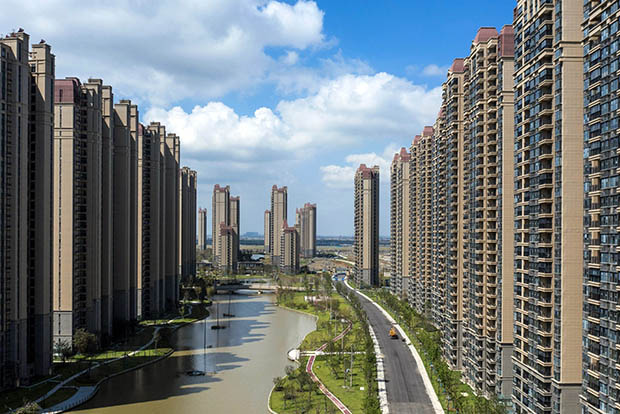
Business News report, 20 January 2026: China’s housing downturn is expected to deepen in 2026, with new home sales projected to fall further amid weak demand, elevated inventories, and limited policy intervention, according to analysis by Morgan Stanley.
The US investment bank forecasts that the value of new home sales could decline by 10.5% in 2026, falling to approximately RMB 7.57 trillion (USD 993 billion). The outlook reflects continued caution among buyers and a housing policy approach focused more on risk containment than economic stimulus.
Sales Weakness Signals Prolonged Adjustment
Sales momentum has deteriorated since late 2025, raising concerns that developers will struggle to reduce excess inventory. Analysts estimate that national housing inventory could rise to 31–32 months of supply, despite limited new project launches, highlighting persistent structural imbalances in the market.
Prices Continue to Edge Lower
Morgan Stanley expects new home prices to decline by a further 2–3% in 2026, broadly in line with the pace of decline seen over the past year. Official data shows average home prices fell 2.4% year-on-year in November, marking the fourth consecutive year of price declines.
Since peaking in 2021, national home prices have dropped 12.1%, while second-hand home prices have fallen more sharply, declining 20.8% over the same period, according to analysis by ING.
Cautious Buyers, Motivated Sellers
Consumer confidence remains fragile. A Morgan Stanley survey conducted in October found that 67% of respondents in tier-one cities expect housing prices to fall further, up from 50% in July and 39% in April. Nationwide, many potential sellers indicated a willingness to accept losses, while only 2% of prospective buyers said they plan to purchase a home within the next 12 months.
This imbalance is keeping transaction volumes subdued and preventing developers from clearing unsold stock.
Policy Remains Reactive, Not Expansionary
Analysts say policymakers are likely to maintain a cautious stance in 2026, prioritising financial stability over growth. With the housing sector playing a reduced role in China’s macroeconomic engine, authorities appear less inclined to deploy large-scale stimulus measures.
“We expect housing policy narratives in 2026 to remain similar to 2025, with risk mitigation rather than GDP growth as the top priority,” Morgan Stanley analysts Stephen Cheung and Cara Zhu said in a research note.
Developer Stress Continues
Limited policy support has also weighed on developers. China Vanke, once considered an industry bellwether, continues to face refinancing challenges, having secured only short-term grace periods on domestic bonds totalling USD 813 million, while seeking longer-term extensions.
Outlook: Stabilisation Still Distant
Morgan Stanley expects housing prices in tier-one and major tier-two cities to stabilise only in the second half of 2027, assuming a stable macroeconomic environment. Lower-tier cities are likely to require a longer adjustment period due to oversupply and demographic pressures.
While the downturn is no longer viewed as a systemic crisis, analysts agree that China’s property market remains in a prolonged reset phase, with recovery dependent on a sustained improvement in buyer confidence rather than policy-driven stimulus.